
No products added!
Natural vs Synthetic Perfume Ingredients: What’s the Difference?
When choosing a perfume, most people focus on how it smells, how long it lasts, and whether it suits their personality. But have you ever wondered what actually creates that fragrance? Perfumes can contain ingredients derived from natural sources, laboratory-created aroma molecules, or a combination of both.
The topic of natural vs synthetic perfume is often surrounded by misconceptions. Natural does not automatically mean better, and synthetic does not necessarily mean artificial, low-quality, or unsafe. Both types of ingredients have an important role in modern perfumery.
Understanding the difference between natural vs synthetic perfume can help you make a better choice when selecting a fragrance. Knowing the difference between natural vs synthetic perfume also helps you understand how ingredients, fragrance character, longevity, and overall performance can vary.
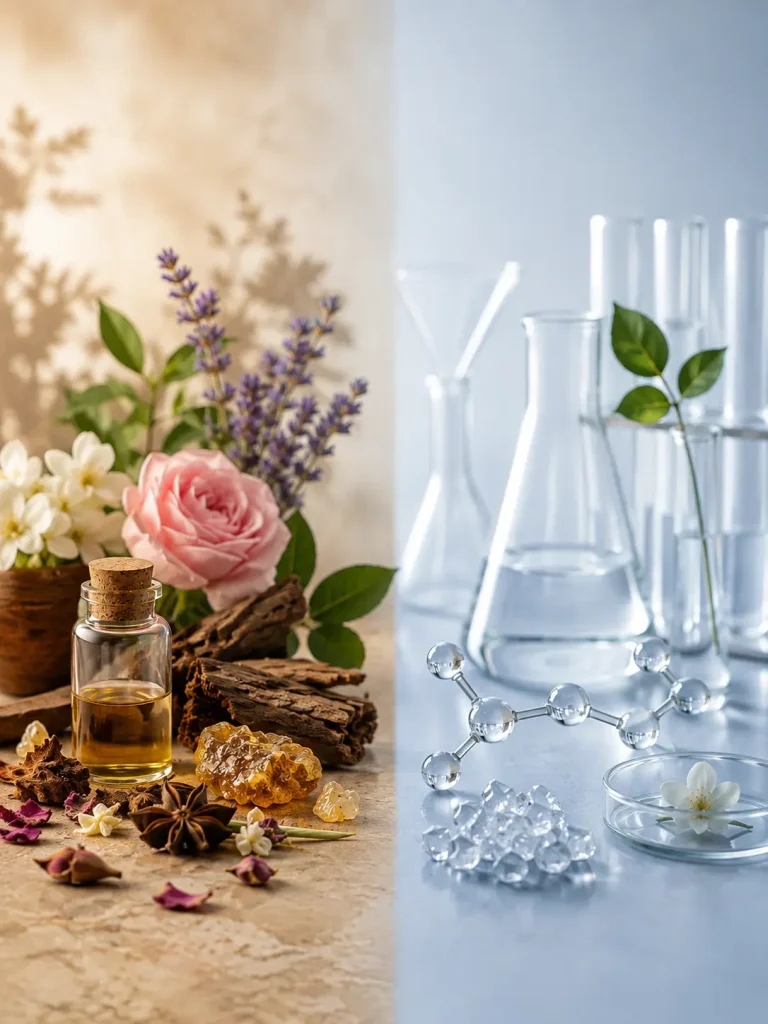
What Are Natural Perfume Ingredients?
Natural perfume ingredients are obtained from natural sources such as flowers, plants, fruits, woods, spices, resins, and other botanical materials.
Common examples include:
- Rose
- Jasmine
- Lavender
- Sandalwood
- Cedarwood
- Patchouli
- Vanilla
- Citrus oils
- Oud
- Musk-derived or musk-inspired natural materials
These ingredients may be obtained through methods such as steam distillation, cold pressing, extraction, or other processes designed to capture aromatic compounds.
Natural ingredients can give perfumes a rich and complex character. However, their scent can vary depending on factors such as the plant variety, growing conditions, harvesting period, and extraction method.
What Are Synthetic Perfume Ingredients?
Synthetic perfume ingredients are aroma molecules created through chemical processes, usually in a laboratory. They are designed to reproduce, enhance, modify, or create specific fragrance characteristics.
Synthetic materials have become an important part of modern perfumery because they allow perfumers to work with a much wider range of scents.
Some fragrance effects are difficult or impossible to obtain directly from natural materials. Synthetic aroma molecules can help create clean, fresh, woody, musky, aquatic, fruity, or other distinctive fragrance profiles.
Importantly, synthetic does not simply mean artificial in the sense of being fake or inferior. It refers to how the ingredient is produced.
Natural vs Synthetic Perfume: Key Differences
The main difference between natural and synthetic perfume ingredients is their source and method of production. Natural fragrance ingredients are obtained from sources such as flowers, plants, fruits, woods, spices, resins, and other natural materials. Synthetic ingredients, on the other hand, are created through controlled chemical processes to produce specific aroma molecules.
Natural ingredients often have a complex and distinctive scent because their aroma can contain many naturally occurring compounds. However, their fragrance profile may vary depending on factors such as the plant’s growing conditions, harvest, origin, and extraction method. Synthetic ingredients are generally more consistent, allowing perfumers to maintain a similar scent profile from one batch to another.
Another important difference is availability and cost. Some natural ingredients can be difficult to source, seasonal, or expensive because they require large amounts of raw materials and specialized extraction methods. Synthetic ingredients can sometimes provide a more accessible alternative, although highly specialized synthetic aroma molecules can also be expensive.
Natural ingredients also offer a connection to traditional perfumery. Ingredients such as oud, rose, sandalwood, jasmine, and patchouli have been used for generations and can add depth and character to a fragrance. Synthetic ingredients, meanwhile, give perfumers greater creative flexibility by allowing them to create particular scent effects that may be difficult or impossible to obtain from natural materials alone.
Sustainability can also differ between the two. The environmental impact of a natural ingredient depends on how it is grown, harvested, transported, and processed. Synthetic ingredients have their own environmental considerations related to manufacturing and raw materials. Therefore, neither category can automatically be considered more sustainable without looking at how the individual ingredient is sourced and produced.
Ultimately, the difference between natural and artificial perfume is mainly related to the origin and production of the fragrance ingredients. A well-crafted perfume can use natural ingredients, synthetic ingredients, or a combination of both to create a balanced, distinctive, and long-lasting fragrance.
Why Do Perfumers Use Synthetic Ingredients?
One of the biggest advantages of synthetic ingredients is creative flexibility.
A perfumer can use aroma molecules to create fragrance effects that may not be available from natural ingredients alone. They can also help improve consistency between different batches of perfume.
Synthetic ingredients can also reduce pressure on certain natural resources. When a particular natural material is rare, difficult to harvest, or expensive to obtain, an alternative aroma molecule may provide a similar olfactory effect without relying heavily on the natural source.
This is one reason why modern perfumes often contain a combination of natural and synthetic ingredients.
Why Are Natural Ingredients Popular?
Natural ingredients have a strong appeal because of their connection to traditional perfumery.
Ingredients such as rose, oud, sandalwood, amber-inspired materials, jasmine, saffron, and patchouli have been used in fragrance traditions for generations.
Natural materials can contribute depth, texture, and character to a fragrance. For many perfume lovers, the story behind an ingredient and its traditional use are just as appealing as the scent itself.
However, natural ingredients are not automatically superior simply because they come from nature. Natural substances can also vary in quality and may cause sensitivities in some individuals.
Do Natural Perfumes Last Longer?
Not necessarily.
Longevity depends on many factors, including:
- Fragrance concentration
- The individual ingredients used
- Base notes
- Skin type
- Weather and temperature
- Application technique
- How the perfume is stored
Some natural materials, such as certain woods, resins, and extracts, can contribute to long-lasting compositions. At the same time, many synthetic aroma molecules are specifically valued for their stability and lasting performance.
Therefore, natural vs synthetic perfume should not be judged simply by which one lasts longer.
Are Synthetic Perfumes Less Safe?
Another common misconception is that synthetic automatically means unsafe.
The safety of a fragrance depends on the specific ingredients, their concentration, and how the finished product is formulated and used.
Similarly, natural ingredients are not automatically risk-free. Certain essential oils and botanical extracts can cause irritation or allergic reactions in sensitive individuals.
For this reason, choosing a perfume should be based on the overall formulation and your personal preferences rather than assuming that one ingredient category is always better.
Which Is Better: Natural or Synthetic Perfume?
There is no single answer.
Natural ingredients offer the character and complexity of materials derived from nature, while synthetic ingredients give perfumers consistency, versatility, and access to fragrance effects that may be difficult to obtain naturally.
Many modern perfumes combine both approaches. A perfumer may use natural extracts alongside carefully selected aroma molecules to create balance, depth, longevity, and a distinctive fragrance identity.
Instead of asking whether natural or synthetic is better, it is more useful to ask whether the finished fragrance smells good, performs well, suits your preferences, and has been properly formulated.
Natural vs Artificial Perfume: Understanding the Main Difference
When comparing natural vs artificial perfume, remember that the distinction is mainly about ingredient origin.
Natural fragrance materials originate from natural sources, while artificial or synthetic aroma materials are produced through controlled chemical processes.
The final fragrance can contain one type, the other, or a combination of both.
A perfume’s quality should therefore not be judged solely by whether its ingredients are natural or synthetic. The skill of the perfumer, quality of the ingredients, formulation, concentration, and overall composition all contribute to the final result.
Why Modern Perfumery Uses Both
Today’s perfumers have access to a much broader palette of ingredients than traditional perfumers did.
Natural materials can provide beautiful depth and authenticity, while synthetic materials can add brightness, diffusion, stability, or unique scent characteristics.
Combining them allows perfumers to create fragrances that are expressive, balanced, and distinctive.
This combination is especially useful when creating sophisticated fragrances featuring notes such as oud, musk, amber, woods, florals, spices, and fresh accords.
How to Choose the Right Perfume for You
Rather than choosing a fragrance solely based on whether it is natural or synthetic, consider how it actually performs for you. Pay attention to:
The fragrance family: Do you prefer floral, woody, oriental, fresh, fruity, or musky scents?
Longevity: How long does the fragrance remain noticeable on your skin?
Projection: How strongly does the scent radiate around you?
Occasion: Is it for everyday wear, work, weddings, evenings, or special occasions?
Climate: In warm climates such as Kuwait, fragrance can develop and project differently than it does in cooler weather.
Personal preference: Ultimately, the best fragrance is one that makes you feel confident and comfortable.
Final Thoughts- Natural vs synthetic Perfume
The debate around natural vs synthetic perfume is not really about choosing one side over the other. Both natural and synthetic ingredients have valuable roles in modern fragrance creation.
Natural materials can bring botanical richness and traditional character, while synthetic aroma molecules can provide consistency, creativity, stability, and fragrance effects that may be difficult to achieve naturally.
When considering the difference between natural and artificial perfume, remember that “natural” does not automatically mean better, and “synthetic” does not automatically mean inferior. What matters most is the quality of the formulation and how the finished fragrance smells and performs on you.
When exploring natural vs artificial perfume, it is important to understand how the source and production of fragrance ingredients can influence the scent, consistency, and overall character of a perfume.
Understanding the difference between natural vs synthetic perfume can help you make a more informed choice when selecting a fragrance. Natural and synthetic ingredients can both play important roles in modern perfumery, while fragrance safety standards help guide how fragrance materials are used.
Whether you prefer the richness of oud and woods, the elegance of florals, or the freshness of modern fragrance compositions, understanding the ingredients behind perfume can make choosing your next signature scent much easier.